The Air Force Got Hacked: What We Know About the Cloud One Breach
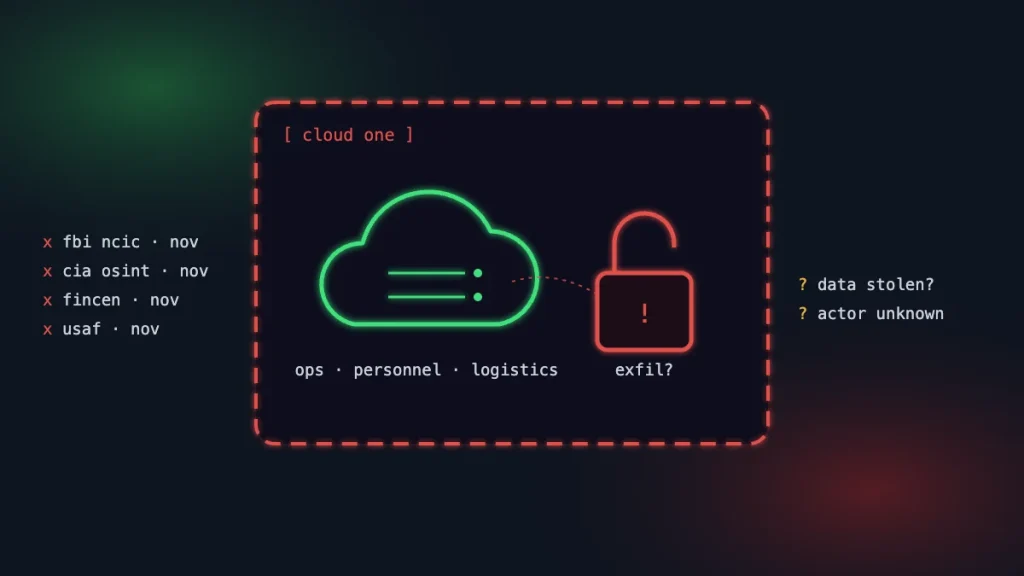
Add the Air Force to the list. A week after the FBI’s NCIC crime database was reportedly breached, Reuters is reporting that hackers got into Cloud One, the Air Force’s flagship cloud platform. It’s the latest in a run of federal intrusions this month that now covers the FBI, the CIA and the Treasury Department.
Here’s what’s known so far, what isn’t, and why this one could be a bigger deal than it sounds.
What happened
On Friday, November 27, Reuters reported, citing three people familiar with the matter, that attackers had breached Cloud One. The intrusion was found sometime in the past month while the platform was being upgraded, and it disrupted application migrations and software updates. One source said the attackers got in through a software vulnerability that hasn’t been named.
A U.S. official separately confirmed the hack to NBC News but couldn’t say when it happened or what it affected. U.S. Cyber Command has reportedly been brought in to assess the damage.
The Air Force isn’t saying much. In its statement to Reuters it said it doesn’t comment on the security posture, vulnerabilities or operational status of specific systems, and that it continuously takes measures to protect its information and mission capabilities.
What Cloud One is and why it matters
Cloud One launched in 2017 as the Air Force’s enterprise cloud. It isn’t a single data center. It pulls together capacity from Microsoft, Amazon, Google and Oracle, and Defense Department organizations use it to host and run their applications. According to reporting from Newsweek and BleepingComputer, that includes systems for:
- Military operations
- Personnel data
- Logistics and maintenance
- The Air Force’s cloud-based command and control system, which handles air defense radar data and tracks bombs and missiles at more than 200 Air Force locations worldwide
That last item is what makes this different from a typical personnel-records breach. A platform like this is a shared hosting environment, so a foothold in it is potentially a foothold next to a lot of tenants’ applications, not just one database. Whether the attackers could actually reach any of that is exactly what investigators are trying to work out.
What we don’t know yet
- Whether anything was stolen. No report has confirmed data was taken. “Potentially exposed” is not the same as exfiltrated.
- Who did it. No group or country has been named.
- When it started. We only know when it was found. Dwell time matters: the Pentagon’s DMDC breach earlier this year went undetected for about nine months.
- Which vulnerability. If it’s in a commercial product, other agencies and companies running the same software may need to patch.
- Whether it’s connected to the other federal breaches. Nobody has said so.
The backstory: a rough November for federal networks
This doesn’t land in isolation. In just the past few weeks:
- FBI: The NCIC breach was reported on November 21, about two months after ShinyHunters hit the FBIJobs.gov recruiting site through an unpatched Oracle PeopleSoft flaw. (I covered that one here.)
- CIA: Hackers reportedly got into an open-source intelligence analysis system earlier this week, in an incident that also touched ODNI and the National Geospatial-Intelligence Agency. That attack was reportedly carried out with ARTEX, an AI-driven penetration testing framework.
- Treasury: Hours after the CIA news, FinCEN said it was investigating unauthorized access to its systems.
The ARTEX angle is worth watching. The FBI has warned that the open-source framework, which automates stages of an attack, has been used by multiple threat actors since at least August, and researchers counted more than 1,600 exposed ARTEX management consoles as of early November. There’s no reporting yet that ARTEX or any other AI tooling was used against the Air Force, the FBI or FinCEN. But the Air Force’s own cyber leadership warned back in September that frontier AI can now handle recon and exploit development in minutes instead of months, and November is starting to look like that warning in action.
What you can do
If you’re an airman, a civilian employee or a contractor, there’s nothing to act on yet, since no one has confirmed personal data was taken. Still, between this and the DMDC breach, it’s a good time to:
- Freeze your credit at Equifax, Experian and TransUnion if you haven’t already. It’s free and takes a few minutes.
- Watch for phishing that references your unit, base or assignment. Breached personnel data makes for very convincing lures.
- Watch for official notification letters, and verify any you get through official channels instead of links in an email.
If you run infrastructure, the lesson is the same one this whole month keeps teaching: the breach was found during an upgrade, not by monitoring. Patch what’s internet-facing, know what’s exposed, and don’t assume your own logs would have caught it. I’ll update this post as more comes out.
Sources
- BleepingComputer: US Air Force cloud platform reportedly hacked in latest federal breach
- Bloomberg: Hackers breached US Air Force’s cloud platform, Reuters says
- NBC News: Hackers attack and penetrate Air Force’s computing platform
- Newsweek: U.S. Air Force system hacked, what could be at risk?
- The Week: Why the Cloud One security breach is a big deal
- The Defense Post: US Air Force braces for autonomous AI cyberattacks