The FBI Got Hacked Again: What We Know About the NCIC Breach
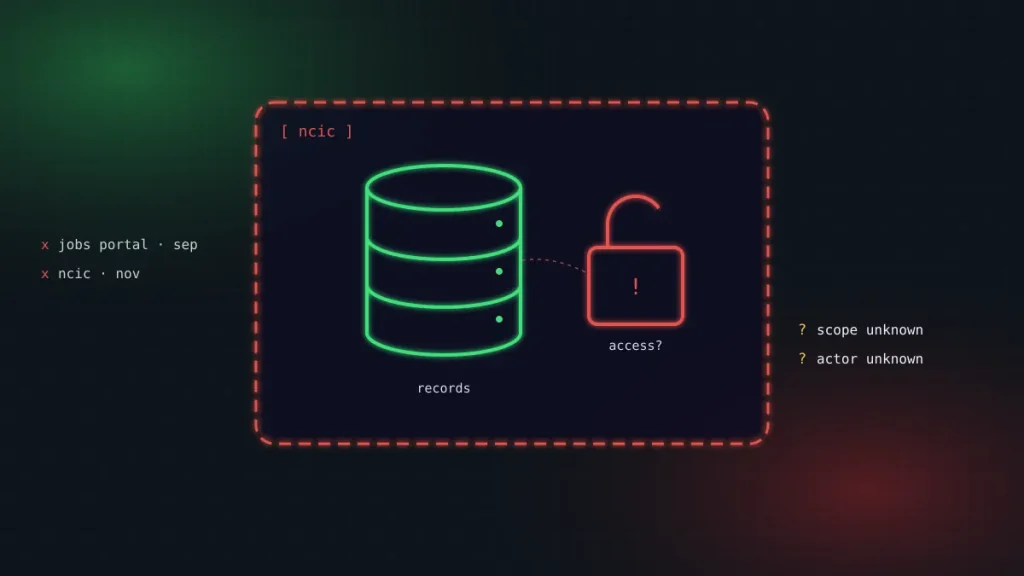
For the second time in about two months, the FBI is dealing with a reported breach of its own systems. This time the target is the National Crime Information Center (NCIC), the database police across the country query on traffic stops, warrant checks and background checks. The FBI hasn’t publicly confirmed it yet, but the Director of National Intelligence has said the bureau is investigating.
Here’s what’s actually known, what isn’t, and how it connects to September’s ShinyHunters hack of the FBI jobs portal.
What happened
On Friday, November 20, CNN reported that hackers had apparently breached NCIC, citing two people briefed on the investigation. According to that reporting, bureau officials learned of the intrusion on Thursday. Fox News, ABC News and the Associated Press have since reported the breach through their own law enforcement sources.
President Trump said in a Saturday phone interview with Fox News that he had just heard about the hack and that it was “not good.” On Sunday, Director of National Intelligence Jay Clayton confirmed on Fox News that the FBI is investigating a possible NCIC breach. He declined to give details, saying the FBI would determine the origin and scope and then tell the public.
The FBI itself has not confirmed the breach. It declined to comment over the weekend and didn’t respond to questions from CNN, Reuters or BleepingComputer.
What NCIC is and why it matters
NCIC has been the FBI’s central crime-information system since 1967. Federal, state and local agencies use it to share records on:
- Wanted and missing persons, and outstanding arrest warrants
- Stolen vehicles and stolen firearms
- Protection orders and registered sex offenders
- Criminal histories and other criminal justice records
It also sits underneath gun background checks. NICS, the system that runs checks for firearm purchases, queries NCIC along with other databases, which is why Fox described NCIC as holding gun-check records. Nobody has reported any disruption to NICS checks, though.
There are two very different ways a breach like this can hurt:
- Read access: Someone can look up records they shouldn’t see, such as who has a sealed warrant, who’s listed as a missing person or who’s under a protection order. That’s a privacy and intelligence problem, especially if it exposes ongoing investigations.
- Write access: Someone can add, change or delete records. Retired FBI supervisory special agent Jason Pack warned on Fox that altered records could put officers in danger at traffic stops. A deleted warrant means a wanted person drives away, and a fake one means an innocent driver gets treated as armed and dangerous.
So far there’s no public word on which of these happened, if either. NCIC is accessed by thousands of agencies through state networks and terminals, which makes it a big attack surface. The weak point could just as easily be a compromised local or state account as the FBI’s own servers.
What we don’t know yet
- How they got in. No entry point has been reported.
- Whether data was stolen or changed. Sources have only said the scope isn’t clear.
- Who did it. No group has claimed it, and BleepingComputer reports no sign that it’s linked to ShinyHunters or the September breach.
- Whether it’s even the FBI’s own system. When asked, Clayton wouldn’t say whether the FBI’s database itself had been breached.
Treat early reporting carefully. Everything specific so far comes from unnamed sources, and details on a breach like this usually shift a lot in the first few weeks.
The backstory: September’s jobs portal hack
This comes on the heels of a much more public breach. On September 22, ShinyHunters claimed it had broken into the FBI and taken “very sensitive data on almost ALL FBI Agents” and anyone who applied for an FBI job. The FBI took FBIJobs.gov offline and later called it a “major” cyber incident.
Here’s how that one played out:
- How they got in: ShinyHunters told BleepingComputer it exploited an Oracle PeopleSoft flaw behind the jobs portal, then moved into FBI-managed AWS GovCloud systems. Director Kash Patel said the breach happened on a platform managed by a third party.
- What was taken: Reporting from CNN, TechCrunch and Politico describes Social Security numbers, birth dates, home addresses, emergency contacts and some medical and psychiatric records. It included people working in sensitive units focused on China and Russia. In November, Politico reported a memo warning that Justice Department staff in U.S. attorney offices may also be affected.
- Why they did it: ShinyHunters said it wasn’t after money. It wanted the FBI to retract a May 2026 public service announcement about the group’s attack on the Canvas learning platform.
- The crackdown: Dutch police arrested a 24-year-old in Amsterdam whom the FBI called one of the group’s alleged leaders. A member known as “Rey” was reportedly detained in Jordan and is cooperating, and a Canadian man was arrested in Pennsylvania in October. The FBI says ShinyHunters and its associates have breached more than 140 organizations and collected at least $70 million in extortion payments.
What you can do
If you’re a current or former FBI employee or applicant, assume your September data is out there:
- Freeze your credit at Equifax, Experian and TransUnion. It’s free and takes about 15 minutes.
- Get an IRS Identity Protection PIN so nobody can file a tax return in your name.
- Watch for targeted phishing that uses your real personal details. That data is ideal for convincing social engineering.
For everyone else, the NCIC story is mostly one to watch. If you run systems for a law enforcement agency or anything that connects to state criminal justice networks, now is a good time to review who has terminal access, enforce MFA on every account that can query NCIC, and make sure audit logging is actually being reviewed.
I’ll update this post as the FBI releases more about what happened.
Sources
- BleepingComputer: FBI reportedly hacked again, this time targeting nationwide police database
- Fox News: FBI probes second cyberattack in months
- Fox News: Retired FBI agent warns NCIC breach could threaten police safety
- WUSA9: FBI criminal information database breached
- Epoch Times: FBI looking into potential hack, says DNI Clayton
- CNN: FBI grapples with fallout from massive data breach
- NPR: FBI hunting the hackers who stole its employees’ sensitive data
- BleepingComputer: ShinyHunters hacker reportedly detained in Jordan
- BleepingComputer: FBI tells ShinyHunters members to turn themselves in